Author: andras

Fast track entry of Sinoma Insulators

FAST TRACK ENTRY OF SINOMA INSULATORS
A collaboration between Xytecs & Anderman & Company

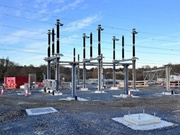
To meet the growing demand for reliable power transmission components and an urgent client requirement to qualify a new supplier, Anderman & Company identified Sinoma, a leading Chinese insulator manufacturer, as a potential solution. However, this required navigating complex UK approval processes, building confidence with the end client, Balfour Beatty, and ensuring Sinoma’s product specifications met UK standards with all necessary compliance documentation.

  • The Solution

    Through a structured and collaborative approach, Anderman & Company and Xytecs facilitated Sinoma’s fast-track entry into the UK power sector. By addressing the technical and compliance requirements efficiently, we secured approval for Sinoma insulators from Balfour Beatty within the critical project timeline, ensuring seamless project delivery without delays.

  • The Approach

    Anderman & Company partnered with Xytecs to act as the technical bridge
    between Sinoma and the UK end client. By working closely with the end client, we
    facilitated product validation, ensured regulatory compliance, and prepared the
    necessary engineering documentation, including test certificates, quality audits,
    and technical data sheets. Leveraging our expertise with UK EPCs, we provided
    local support to streamline the approval process and ensure alignment with project
    requirements, fully meetin
  • The Result

    Sinoma successfully entered the UK power sector as an approved insulator
    supplier. Their products met all technical and quality criteria, enabling Balfour
    Beatty’s project delivery to proceed smoothly and on time. This collaboration
    strengthened the global supply chain and highlighted the effectiveness of
    international partnerships in delivering local solutions quickly and efficiently.
This collaboration underscores how the partnership between Anderman & Company and
Xytecs positioned us as trusted technical and supply chain partners in the power sector.
By bridging international suppliers with rigorous UK engineering standards, we facilitated
Sinoma’s successful entry into a critical market, meeting tight deadlines with precision
and reliability.

Continue reading

Industrial Ceramics: The Superhero Material

Industrial Ceramics: The Superhero Material

Industrial ceramics, also known as engineering ceramics or advanced ceramics, combine the superpowers of exceptional mechanical, thermal, chemical strength as well as an ability to resist wear that make them essential in today’s ever-evolving world. These materials are critical across a wide range of manufacturing processes—many more than you might think.

When you consider ceramics, traditional pottery or decorative items might come to mind. However, industrial ceramics are engineered to a much higher standard and are specifically designed to solve engineering challenges, ranging from smelting to car brakes.

The primary materials used in industrial ceramics include oxides, nitrides, carbides, and certain composite materials, making them ideal for environments where reliability and performance are critical for safety and longevity and compared to other materials, industrial ceramics offer a unique set of advantages, including heat resistance, hardness, and resistance to wear and corrosion.

These benefits make industrial ceramics indispensable across a wide range of applications, including:

  1. Thermal Applications: Industrial ceramics are essential in applications requiring high-temperature materials due to Their resistance to high temperatures and lightweight nature provide reliable performance in demanding conditions., such as temperature measurement, molten metal handling, heat treatment, ceramic manufacturing, power generation, and glass production.
  2. Electrical Industry: Ceramics are key components across the electrical industry, from fuse bodies to substrates for modern computer chips. Applications include temperature measurement, power distribution, heating, lighting, electrical insulation, medical equipment (scanners), electronics, and solar. Ceramics’ ability to form complex shapes, excellent electrical insulation, and low dielectric loss make them indispensable.
  3. Mechanical Applications: Their resistance to wear and high temperatures means industrial ceramics are ideal for thermo/mechanical applications. Applications include pumps, mining, medical implants, general engineering (slides, liners, mixers, rollers, dies), paper industry, and textiles. Benefits include dimensional stability, wear resistance, precision manufacturing, high surface quality, and hardness.
  4. Chemical-Resistant Materials Applications: Ceramics have proven highly effective in handling solid, liquid, and gaseous substances that adversely affect other materials. Applications include oil & gas, chemicals, water treatment, medical, automotive, scientific, and mining industries. Benefits include resistance to chemical attack, non-reactivity, biocompatibility, dimensional stability, wear resistance, and high surface quality.
  5. Optical Applications: Quartz glass offers extraordinary optical transmissivity for ultraviolet light. Its low coefficient of thermal expansion (CTE) enables it to withstand very high operating temperatures. No other industrial glass material can match quartz glass for UV-light transparency. Applications include space technology, UV-quality quartz glass components, high-temperature applications, prisms, and beam splitters. Benefits include low CTE, a broad operating temperature range, UV-quality glass, high-temperature shock resistance, pure material quality, and low fluorescence.

Industrial Ceramics: A Superhero Material

The properties of industrial ceramics, compared to materials such as metals and rubbers, mean they can provide a significant improvement on manufacturing efficiency, product quality and longevity. Their hardness and resistance to wear has the added benefit of reducing maintenance costs, while their thermal stability and corrosion resistance allows them to be used in extreme conditions where other materials may fail.

Industrial ceramics truly are a superhero material, playing a crucial role in driving modern manufacturing and engineering—shaping a sustainable future and empowering industries to thrive.

For more detailed information on industrial ceramics and their applications, visit www.anderman.com.

Gary Hateley

Director at Anderman & Company

Continue reading

Innovative Solutions for Discontinued Materials

Innovative Solutions for Discontinued Materials

The client specialises in the heat treatment of metallic parts, serving industries that require precision and reliability.

  • The Problem / Requirement

    The client faced a critical challenge when a furnace became inoperable. The furnace builder had ceased supplying a specialised ceramic material essential for the furnace’s tubes supporting its electrical resistances. With no equivalent readily available on the market, operations were at risk of prolonged downtime.

  • The Solution

    Anderman Ceramics proposed an alternative material that met all essential requirements, including dielectric properties, thermal shock resistance, and mechanical strength at high temperatures. This enabled the client to resume operations with a reliable replacement material.

  • The Approach

    Through a close consultative approach, Anderman Ceramics worked with the client to analyse their specific application needs. This allowed Anderman Ceramics to explore additional material and specification options that might not have been initially obvious and suggest high quality products to deliver.

  • The Result

    The proposed solution allowed the client to successfully restart their furnace, with the alternative ceramic tubes performing reliably. This ensured minimal downtime and preserved operational efficiency.

This project underscores the importance of a customer-focused and flexible approach to deeply understanding client requirements. While exact replacements may not always be feasible, Anderman Ceramics’ consultative approach ensures the delivery of effective alternative solutions that drive clients’ long-term success.

Continue reading

Alternative Materials for Operational Continuity

Alternative Materials for Operational Continuity

The client specialises in the manufacturing of metallic wires and bars, serving industries such as automotive, energy, construction, and agriculture.

  • The Problem / Requirement

    They faced a significant challenge with their continuous induction furnace. The standard ceramic tubes frequently broke, resulting in costly 4–5-hour production stoppages for replacements and inductor repairs. These disruptions not only increased maintenance expenses but also negatively impacted productivity.
  • The Solution

    Anderman Ceramics proposed an advanced material 25 times mechanically stronger and capable of enduring the furnace’s demanding operating conditions. This innovative solution offered a durable and reliable replacement, significantly enhancing the furnace’s performance.
  • The Approach

    Through a close consultative approach, Anderman Ceramics worked with the client to thoroughly understand their application and identify the root cause of the issue. By leveraging their expertise in advanced materials and their extensive supplier network, Anderman Ceramics recommended and helped design the specification of an alternative material that had not previously been considered.
  • The Result

    The solution enabled the client to significantly reduce production losses and maintenance costs by minimising the frequency of furnace stoppages. This ensured smoother operations and greater efficiency for both them and their clients.

This project highlights the value of considering alternative advanced materials, even with a potentially higher initial cost, to achieve significant long-term savings and operational improvements. Anderman Ceramic’s customer focus and commitment to understanding client needs ensure the delivery of tailored solutions that drive ongoing client success.

Continue reading

Anderman & Company Partners with Qured to Support Employee Health and Well-being

Anderman & Company Partners with Qured to Support Employee Health and Well-being

Anderman & Company is pleased to announce a new partnership with Qured, a leading provider of healthcare screening services, offering essential support and resources to Anderman & Company’s UK teams.

With a strong commitment to supporting the health and well-being of its teams, Anderman & Company has partnered with Qured to provide personal health screenings that deliver actionable insights for early health intervention. By focusing on preventative healthcare, Anderman & Company and Qured’s employee health screening program aims to detect the earliest signs of the most common conditions that impact the workforce.
The initiative provides comprehensive clinical support, advanced diagnostics, and ongoing care to help employees make lasting changes for better health. By focusing on both physical health and overall well-being, this partnership reflects the company’s dedication to creating a healthy, balanced work environment where everyone has the resources they need to perform at their best.

“We’re excited to be working with Qured to prioritise the health of our team members” said Gary Hateley, Director at Anderman & Company. “By partnering with Qured, we are ensuring that our people have access to the support they need to stay healthy and happy, ultimately helping everyone thrive together.”

The Qured team, led by Lyz Swanton and Alex Templeton, brings a wealth of knowledge and expertise to this initiative. Specialising in providing accessible healthcare services for businesses, Qured’s services are designed to help employees take proactive steps towards improving their physical and mental health.

Lyz Swanton Co-Founder & Chief Operating Officer commented “We’re delighted that Anderman & Company chose to work with Qured out of the many health services that are available – it shows their commitment not just to their people now, but their future health by taking a truly preventative approach. At Qured we know that good health is good business, and are happy to be working with another forward-looking team who believes the same.”

About Anderman & Company

Established in 1947, Anderman & Company Limited is a global leader in providing innovative ceramic materials and high-voltage electrical transmission solutions. With over 75 years of expertise, we offer tailored supply chain solutions to industries worldwide, including aerospace, automotive, power generation, and alternative energy. With presence across the UK, France, USA, China, and Southeast Asia enables Anderman & Company support customers across Europe, Asia, and the Americas.
Press Enquires contact – Ralph Risk on 0774 8808 519
email: r.risk@rr-marketing.co.uk
For more information about Anderman & Company, please visit www.andermangroup.com.
For more information about Qured, please visit https://www.qured.com/

Continue reading

Why consider pressed or formed ceramics?

Why consider pressed or formed ceramics?

Formed ceramics development has grown out of a long history of the use of ceramic materials, which have been used in industry for an extremely long time. Early man first developed the use of clay based ceramics to facilitate the production of metal tools alongside Chinese production of fine pottery.

Fast forward to today and ceramic materials remain one of the most important materials used world- wide. Without industrial ceramics we would have no metal production, no mass produced fabrics, no petrochemical industry, no electricity supply, and no advanced electronics. A different world to the one we all know.

Continue reading

A Substitute to Steatite: Pyrophyllite

A Substitute to Steatite: Pyrophyllite

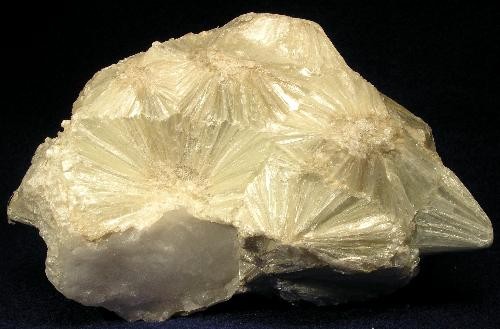
Lava, known scientifically as Pyrophyllite, is one of the most promising natural solid materials in the world of industrial ceramics as a substitute to Steatite. Pyrophyllite can be used by customers who are in need of precision machined parts of Steatite in very small volumes for stocks, prototyping, and machinery, where it is not economically viable to manufacture the tooling necessary to produce the steatite parts. This material would an ideal substitute, primarily due to its similar properties, to Steatite. The fact that Pyrophyllite can withhold a maximum temperature of 1300oC as a refractory part means that it would be ideal for furnace parts. Lava is also capable of withstanding up to 700oC as an electrical insulator. Similarly to Steatite, it also starts to show leakages in electrical current at temperatures above700oC through a decrease in insulation.Although many of the mechanical, electrical and thermal properties are similar for both Lava and Steatite, this does not necessarily mean that the reactionary corrosion of each material will be the same. This is primarily due to the different chemical compositions of the two materials. These are because while Steatite is 65% SiO2 with 34% MgO, Lava has got 60% SiO2 with 35% Al2O3. These different compositions may result in two different reactions to the environment where the part is to be used.

There are two different types of Pyrophyllite, PYRO-13 and PYRO-11. Of the two, PYRO-13 is the most similar to general Steatite, therefore this material could very easily be used to replace Steatite items, bushing, bolts, seals, nuts and insulators, in industrial applications. Another positive fact of PYRO-13 is that it’s capable of working under vacuum conditions. In comparison, PYRO-11 is more similar to a porous Steatite. This means that it could be used for similar applications to PYRO-13, but when stronger thermal shock resistance is needed. This is due to the higher 3% porosity in PYRO-11, which also works well in contact with non-ferrous metals. Lava design is limited to a maximum wall thickness of 15mm, if greater the material may crack during firing. Therefore it may be required to lighten the more solid areas when close to the 15mm thickness by drilling close to one end or rounded oblong bores.

The typical time for a quotation of Pyrophyllite is between 1-2 weeks and production is usually within 4-6 weeks, but the parts are provided finished, already precision machined and fired for industrial ceramics use. Typically the lead time to make tooling and produce steatite parts runs several weeks longer and requires a higher volume of parts to make it economically viable.

Image attribution: Rob Lavinsky, iRocks.com – CC-BY-SA-3.0

Continue reading

Design thinking for industrial ceramics

Design thinking for industrial ceramics

With the current state of the industrial economy around the world this is an ideal time to consider the use of alternative materials for your applications and processes. Industrial ceramic materials, for example, offer a vast array of compositions and performance characteristics and can be a cost effective alternative in many harsh environments such as high temperature, electrical resistance, wear applications and chemical contact.

One thing however should be considered carefully in the design of ceramic alternatives. The tolerance of a dimension on a metal part may only have minor effect on cost. The same can not be said about ceramic and the cost difference for a slightly tighter tolerance can be significant. Very tight tolerancing can be achieved on ceramic components. The question you should always ask yourself is “Do we need it?”. This should also be the case for any standard tolerances listed on the drawing. If you need precision this can be achieved, but where you don’t need it, money can be saved.

As the accuracy of formed ceramics can vary greatly, it is important to chose the correct forming method. Careful selection of the process used to make the part or indeed to form the base part for later machining will keep the costs to a minimum. The use of a slightly more expensive forming process can at times save a considerable amount of machining. For improved tolerance the parts can be machined “green” (before firing) but for very tight tolerances then the parts must be machined after firing. Finish machining is often difficult and slow. This can add significant cost so should only be used when necessary.

The removal of unnecessary tolerancing and features such as chamfers can often result in massive savings. It is not uncommon for a part with excessive tolerance requirements to cost several times as much as a part correctly designed to be made in ceramic and to suit the application.

In conclusion, it is worth fully exploring alternatives materials such as industrial ceramics , to determine what cost savings, or product life and performance enhancements can be achieved. Remember however, alternate materials may necessitate a change of design thinking in order to maximise the advantages they can offer.

Continue reading